Connect+ March 19, 2026
Share this story
The media landscape continues to shift as platforms like Reddit and YouTube reshape performance at scale, while traditional channels evolve with more precise, strategy-driven execution. In this latest Connect+, we break down what these changes mean for modern media planning and how brands can stay ahead.
Reddit Strengthens Retail Performance
The retail media landscape is evolving rapidly with the rise of platforms like ChatGPT and retail media networks, but recent research suggests advertisers should also be factoring Reddit into their media mix. Findings show that Reddit can significantly impact digital retail campaigns, with the potential to increase ROAS by more than 80%.
Reddit is particularly effective as a mid-funnel tactic, influencing consumers earlier in the decision-making process before purchase. Users trust the platform for its authentic, peer-driven insights into products and services, making it a valuable source of influence. This role is further strengthened by Reddit’s growing importance in training AI models, where it is recognized as a trusted source of user-generated content.
DCW has been an early adopter of Reddit advertising and continues to drive strong performance across a range of client campaigns. If you are looking to incorporate Reddit into your strategy to boost retail performance or support other objectives, we can help build a plan tailored to your goals.

YouTube Sets the Pace as the Top Media Platform
There is a new revenue leader in the media landscape, and it’s digital. YouTube surpassed Disney in 2025, generating $62.3 billion in revenue compared to Disney’s $60.2 billion. Most of YouTube’s revenue comes from advertising, reinforcing its position as one of the most important platforms for scale and inventory.
With approximately 250 million monthly active users as of early 2026, YouTube offers advertisers significant reach, frequency, and highly granular targeting based on interests and behavior. Its inventory continues to expand through a revenue-sharing model that incentivizes creators to consistently produce new content. In fact, creators have earned over $100billion from the platform over the past four years, fueling continuous content growth and engagement.
DCW has extensive experience planning, activating, and optimizing YouTube campaigns across multiple verticals and formats. Whether you are looking to launch or expand your presence on the platform, we can help develop a strategy that maximizes reach, efficiency, and performance.

Owning the Commute with Corridor-Based OOH
Traditional out-of-home buying often focuses on securing individual boards. A more advanced strategy centers on owning an entire commuter corridor rather than isolated placements. This begins by identifying the primary travel routes used by the target audience, including highways, commuter rail lines, and arterial roads connecting residential and business districts.
Media is then concentrated across that corridor using a mix of bulletins, digital boards, transit shelters, and directional signage. This creates a sequence effect, where commuters encounter the brand multiple times within a single trip, increasing recall and reinforcing messaging.
For categories such as healthcare, financial services, and regional retail, this approach strengthens geographic authority by aligning visibility with the routes people take when making real-world decisions. At DCW, corridor-based OOH planning is approached as a geographic influence strategy, using commuter patterns, market entry points, and destination proximity to build sustained visibility across high-impact travel routes.

Aligning Broadcast with Real Decision Moments
Traditional broadcast buying has long focused on delivering reach across broad dayparts like morning drive, midday, and evening news. A more strategic approach aligns exposure with behavioral decision windows when audiences are more receptive to specific messages. Instead of prioritizing ratings alone, this method considers how daily routines shape attention and mindset.
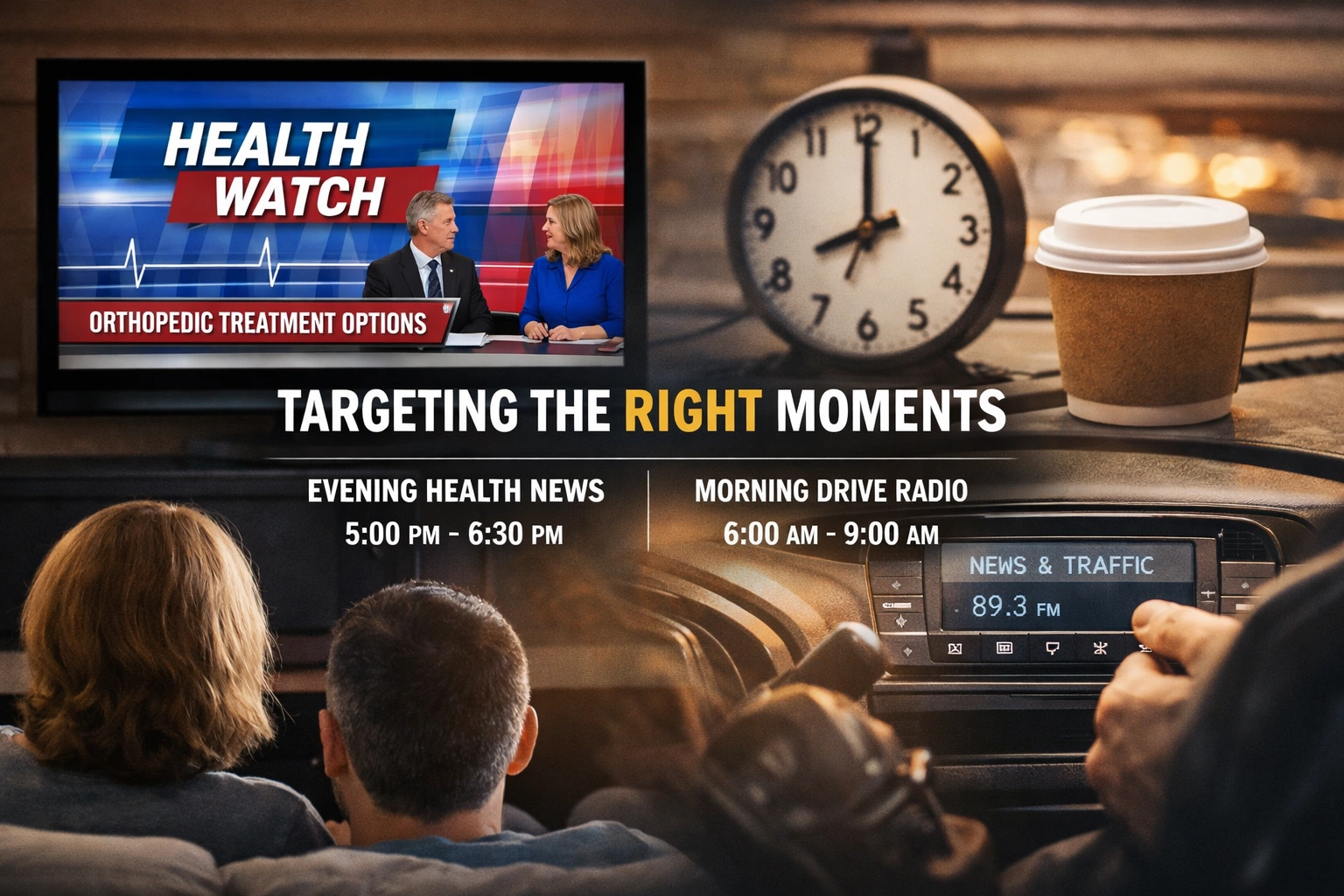
For example, early evening local television news between 5:00 and 6:30 PM can be especially effective for regional hospitals promoting orthopedic or cardiovascular services. This is when households transition from work to home and are more likely to engage with health-related content. Messaging can be concentrated within local news health segments, consumer health reports, and medical updates.
Additional frequency can be built through morning drive radio between 6:00 and 9:00 AM, when commuters are actively consuming news and information. Aligning placements with programs that regularly feature health reporting ensures messaging appears in relevant, high-attention environments.
At DCW, broadcast planning evaluates both programming context and behavioral timing, helping traditional TV and radio placements drive stronger visibility, relevance, and patient consideration.